 EN
EN


At Uniseel, we believe that sending a sample package is more than a commercial transaction; it is the foundation of a technical partnership. To ensure absolute transparency and engineering success on your high-speed capping lines, every sample kit we dispatch is accompanied by an official letter outlining our strict compliance records and manufacturing philosophy. This blog post introduces the context of this open letter—explaining why we hold our Unishell metal closures to an industry-leading ±0.1mm tolerance, how our SGS compliance safeguards your formula's integrity, and why physical collaboration on bottle neck calibration is the single most critical step for achieving a perfect, leak-free hermetic seal on your automated production floor.
1. Transparency First: Building Trust with Verified Compliance
In the pharmaceutical, nutraceutical, and high-end cosmetic sectors, regulatory vetting is often the longest step in the procurement process. Many packaging suppliers ship samples in plain, undocumented bags, leaving quality assurance (QA) teams with the burden of chasing down certifications. Uniseel rejects this approach. Our physical sample packages arrive with an open letter that immediately references our global compliance benchmarks, verified by SGS-CSTC Standards Technical Services Co., Ltd.
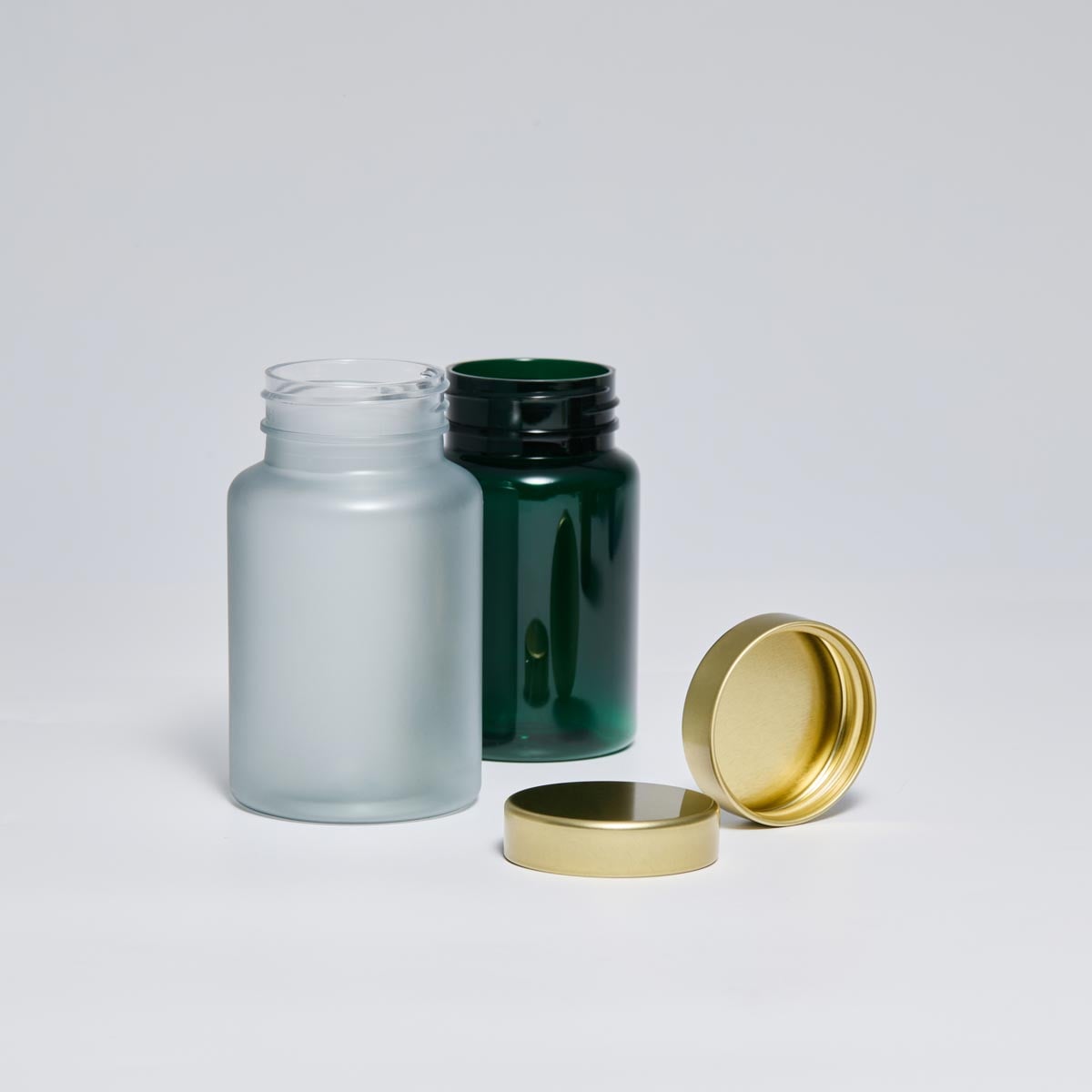
Whether you are reviewing our Silver or Gold Unishell Style Caps, our documentation certifies absolute compliance with FDA 21 CFR 175.300 (Report No. TAOPC26004208103), RoHS Directive 2015/863 (Report No. CANPC26012340303), and REACH SVHC 253 standards (Report No. CANPC26012340301). Our induction heat seal (IHS) liners and pressure-sensitive liners also carry SGS food-contact material (FCM) clearance. By front-loading this verifiable data directly in our sample shipments, we streamline your internal audit protocols and establish immediate regulatory compliance.
2. The Reality of the Cap-Bottle Interface: Understanding Tolerances
One of the key technical messages in our accompanying letter is the honest acknowledgement of manufacturing tolerances. No glass or plastic container is perfectly identical, and neither is any metal cap. Standard industry tolerances permit deviations up to ±0.25mm or ±0.50mm, which can cause severe operational issues on automated capping lines. If a bottle neck is slightly too wide and a metal cap is slightly too narrow, the resulting interference causes high-friction threading, surface scratching, and stripped threads. If both are on the loose end, the applied capping torque will be insufficient, causing the IHS foil liner to fail or leak during transit.
Our letter emphasizes that while human hands might not easily perceive a deviation of 0.15mm, high-speed automated capping machinery is highly sensitive. Ensuring a consistent application torque between 17 and 25 in-lb requires minimizing this interface clearance down to a perfect mechanical harmony.
3. Precision-Backed Production: Our ISO 9001 and Patent Infrastructure
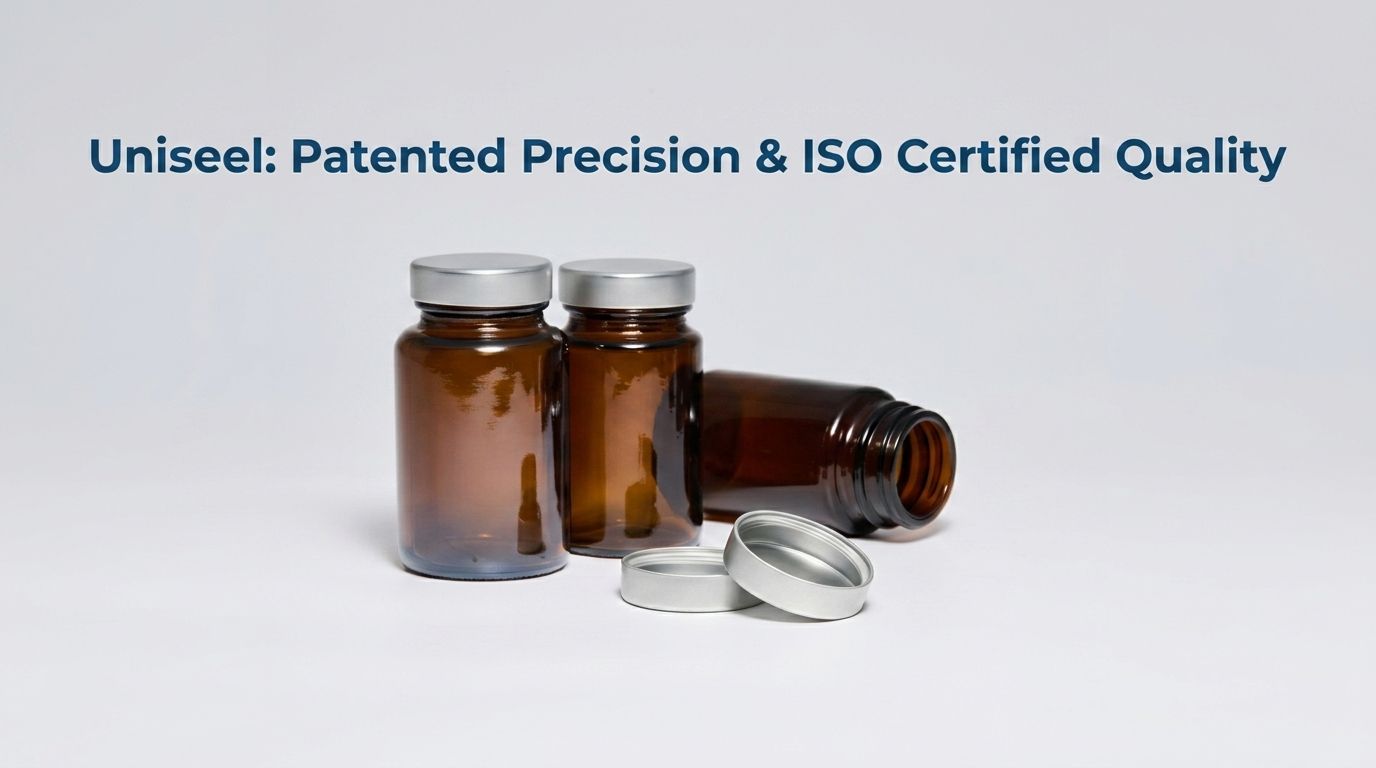
To back up our promise of a ±0.1mm tolerance, we proudly open our factory doors—metaphorically—through our technical documentation. Our advanced production division, Hangzhou Lin'an Shengxiang Technology Co., Ltd., operates under a certified ISO 9001:2015 Quality Management System (Registration No. 07625Q1617R0S-ZJ/001). This systematic quality control is supported by our proprietary patent portfolio, specifically engineered to eliminate dimensional drift:
• Patent ZL 2023 2 3287198.X: Guarantees the micro-tolerance alignment of our progressive stamping molds, preventing wall-thickness irregularities during the metal draw.
• Patent ZL 2023 2 3216593.9: Protects our specialized curling pre-treatment, ensuring our cap lips maintain perfect roundness for automated line sorting.
• Patent ZL 2023 2 3141660.5: Secures our high-precision sealing production apparatus, laying every induction liner absolutely flat to eliminate torque variation.
4. Collaborative Calibration: Why We Request Your Target Bottles
The ultimate goal of our sample package letter is to initiate a 'Collaborative Calibration' workflow. While our standard samples are micro-adjusted based on the physical bottle specs initially provided, the most robust production run is achieved when our engineering team receives
2 to 4 target bottles (empty containers) from your actual production batch. By placing your physical bottles under our lab's digital profilometers, our engineers can calibrate the thread-forming machinery to match your bottle's real-world characteristics, bringing the operational tolerance well below ±0.1mm and delivering a 'silk-smooth' capping feel for your brand.
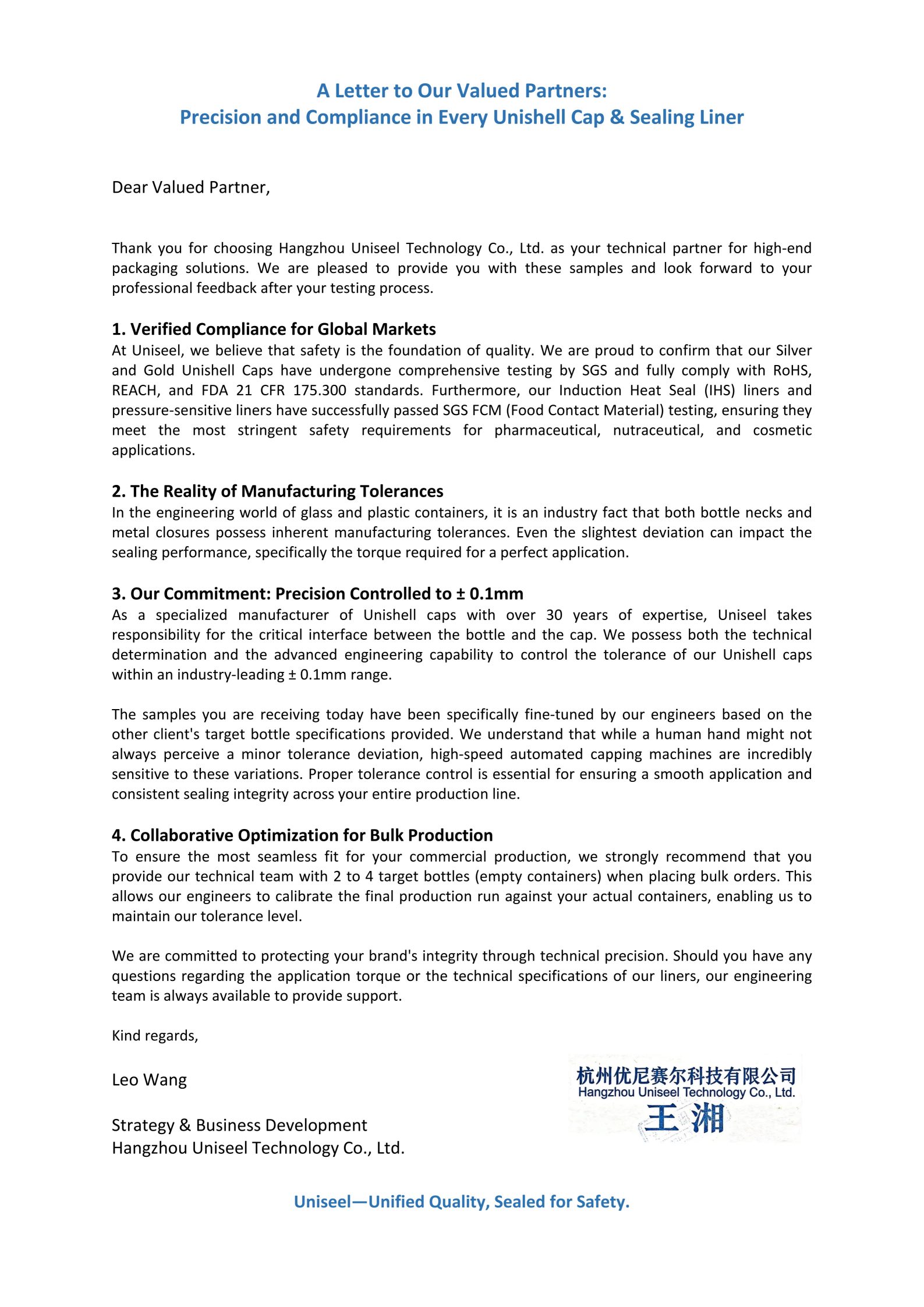
5. The Full Text of the Letter Included in Our Sample Shipments
For absolute transparency, we share the full technical text of the document enclosed with every sample kit we ship to global procurement departments:
 6. Conclusion: Forging Long-Term Engineering Partnerships
Publishing this letter online serves to assure our current and future partners that our samples represent a scientific, measured commitment to their brands' success. Uniseel is not just a packaging supplier; we are your dedicated quality assurance partner. By working in close mechanical harmony with your containers, we ensure your product's journey from our factory floor to your consumer's hands is seamless, safe, and elite.
7. Strategic FAQ: Understanding the Uniseel Open Letter and Sample Process
Q1: What is the primary purpose of the 'Open Letter' included in Uniseel's sample kits?
A: The purpose of the open letter is to provide immediate technical transparency. It outlines our compliance with international standards (SGS, FDA, RoHS, REACH) and explicitly states our commitment to the industry-leading ±0.1mm tolerance standard, ensuring your regulatory and engineering teams have all necessary data the moment the sample package is opened.
Q2: How does including technical documentation with samples reduce procurement vetting time?
A: By front-loading our official Declaration of Compliance (DoC) and SGS test report indexes directly in the physical shipment, we eliminate the need for lengthy email cycles. Quality Assurance (QA) managers can perform immediate due diligence, accelerating the vendor approval process for urgent product launches.
Q3: Why does Uniseel honestly acknowledge manufacturing tolerances in its communications?
A: We believe in engineering honesty. All containers and closures have inherent tolerances. By acknowledging this, we can highlight our ability to control our caps within a strict ±0.1mm range, which is significantly tighter than the industry standard. This minimizes the risk of capping interference or leakage on automated lines.
Q4: What is the technical benefit of sending 2 to 4 target bottles to Uniseel’s laboratory?
A: Sending physical bottles enables our engineers to perform Collaborative Calibration. Using digital profilometers, we map your actual bottle neck's helix and landing finish, allowing us to micro-adjust our forming dies for a 'silk-smooth' mechanical fit that blueprint-only designs cannot guarantee.
Q5: Are the compliance certifications mentioned in the letter verified by an independent third party?
A: Yes. All certifications referenced—including FDA 21 CFR 175.300, EU RoHS, and REACH SVHC 253—are verified through independent testing by SGS-CSTC Standards Technical Services. This third-party validation provides our global partners with absolute regulatory certainty.
Uniseel—Unified Quality, Sealed for Safety.