
 EN
EN


Why Isn’t My Pressure-Sensitive Liner Sticking? A Complete Guide to PS Liner Sealing Problems
Hangzhou Uniseel Technology Co., Ltd. | Technical Blog
“The liner doesn’t stick to the bottles!” It is one of the most common calls we receive from packaging engineers — and in almost every case, the liner itself is fine. Pressure-sensitive (PS) liners are a simple, elegant sealing technology, but they are also unforgiving: if the right pressure is not applied at the right moment, no bond forms. This guide explains how PS liners actually work, the real root causes of “liner not sticking” complaints, the torque values that matter, how temperature affects (and does not affect) performance, and a practical troubleshooting checklist you can use on your own filling line today.
1. What Is a Pressure-Sensitive (PS) Liner?
A PS liner is a disc of polystyrene foam fitted inside a metal or plastic cap. Its underside is coated with a pressure-sensitive adhesive (PSA). When the cap is screwed down onto a container, the liner is compressed against the bottle rim and the adhesive wets the rim surface, creating a tight, tamper-evident seal. The printed message “SEALED for YOUR PROTECTION” on the liner face gives consumers visible confirmation that the container has not been opened.
The decisive detail is in the name: the bond is created by pressure alone. No heat, no induction, no solvent — just clean, even compression between the cap and the rim. This makes PS liners ideal for glass, metal and PET containers in the pharmaceutical, supplement, food and cosmetic industries, and for cold-fill applications where induction sealing equipment is not available.
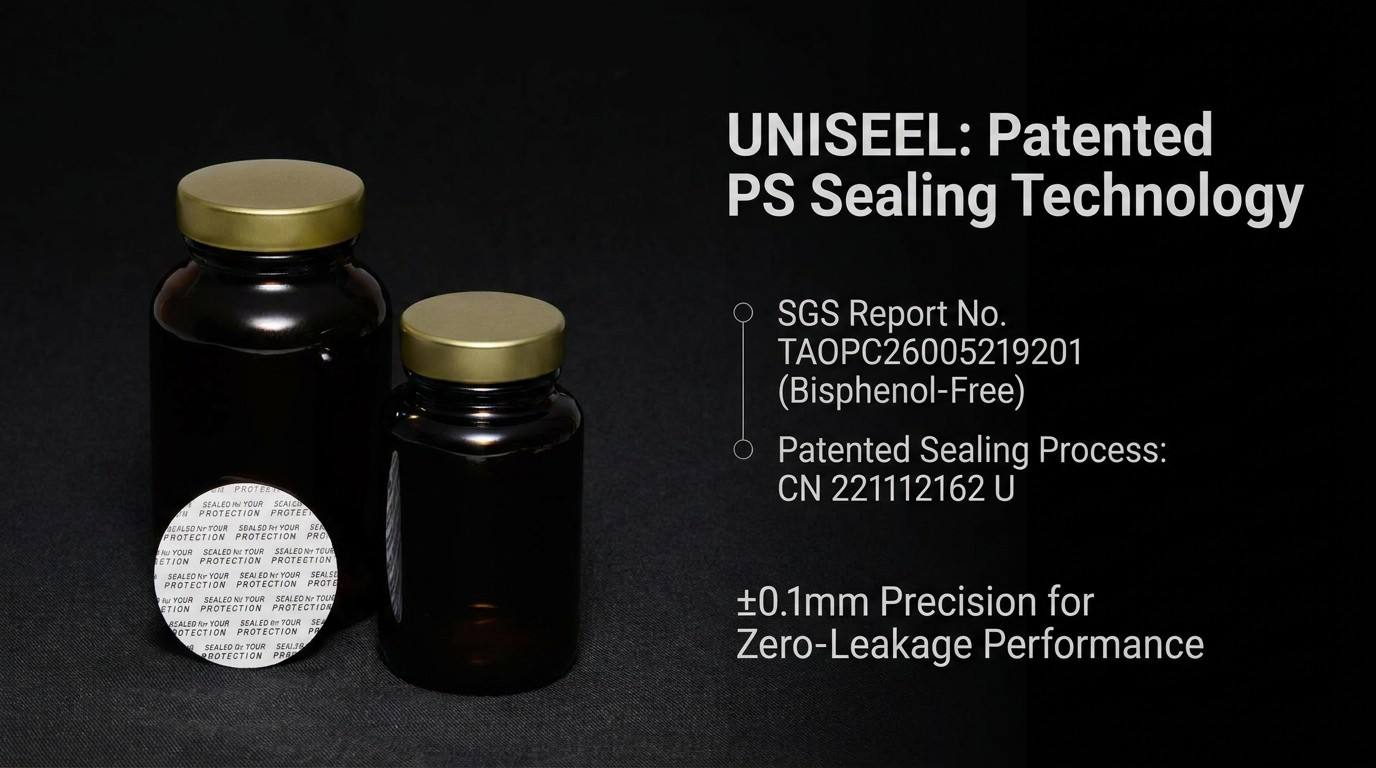
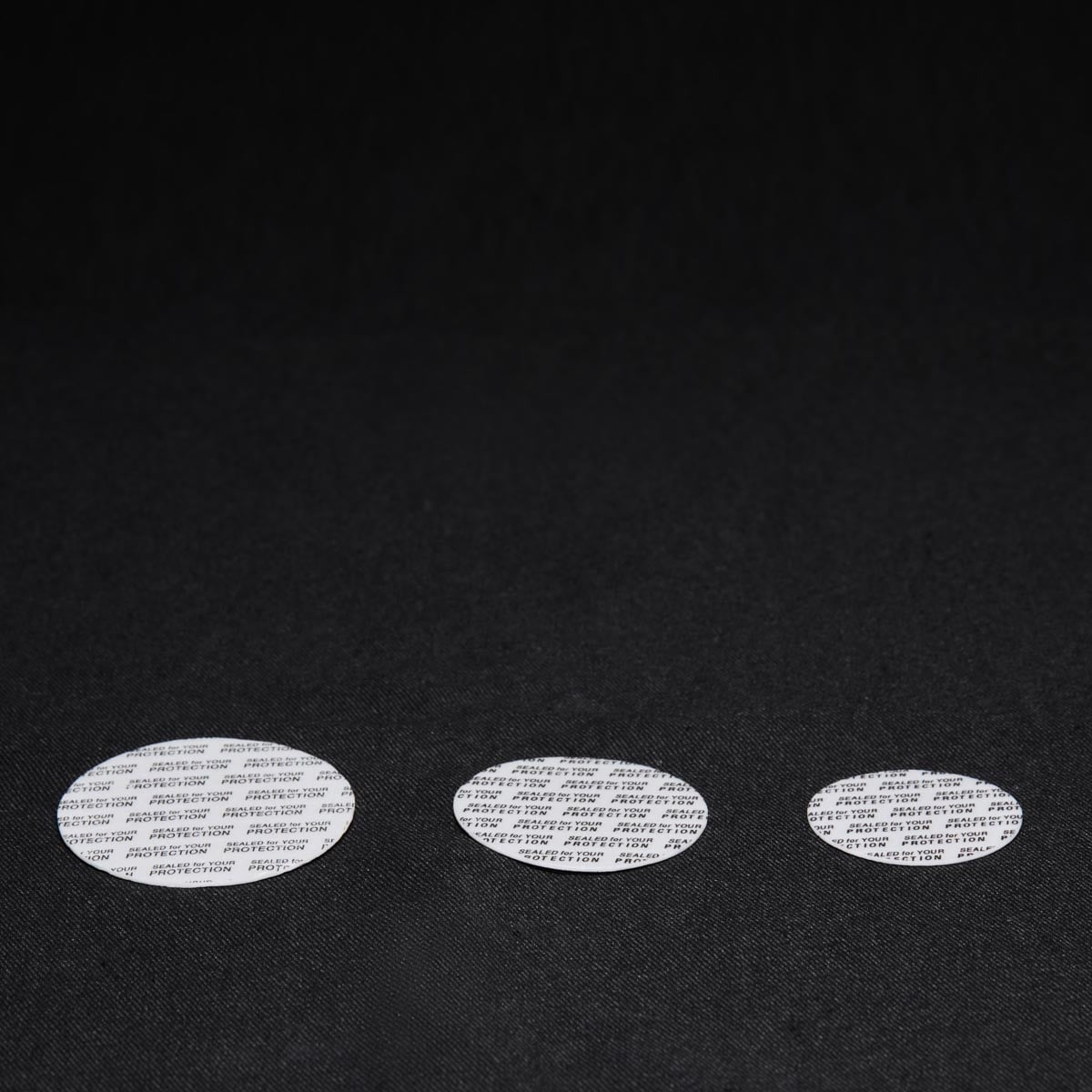 Figure 1 — Uniseel PS (pressure-sensitive) foam liners: the printed face and the adhesive-coated underside that bonds to the container rim under compression.
2. Root Cause No. 1: Application Torque
Why do hand-tightened samples stick perfectly, yet the same cap fails on the production line? Because hand tightening delivers strong, sustained pressure. A capping machine with a low torque setting, or a chuck that does not press the cap down before rotating, delivers almost no real compression — and without compression, a PS liner simply floats on the rim without bonding.
Application torque is the single most important parameter for PS liner sealing. The table below shows the recommended target torque for the two most common closure sizes:
Closure Size |
Target Torque (in-lb) |
Target Torque (N·cm) |
38mm (38-400) |
17 – 21 |
192 – 237 |
45mm (45-400) |
20 – 25 |
226 – 282 |
Measure torque with a calibrated torque meter on the line — do not trust the machine display alone. If sealing is inconsistent, work toward the upper end of the range. Re-verify removal torque after 24 hours: adhesion strengthens under sustained compression, so a weak seal found immediately after capping can often be recovered — or, better, prevented by correct torque from the start.
3. Capping Machine Parameters That Break (or Make) the Seal
A. Down-Pressure Before Rotation: The capping head must press the cap downward before rotation begins (compression-first capping). Insufficient vertical down-pressure before rotation is the most common cause of “no adhesion at all”.
B. Capping Speed: Allow enough contact time under compression. Very high line speeds shorten contact time and prevent the adhesive from fully wetting the rim surface.
C. Capping Head Alignment: Maintain vertical alignment and level cap seating. A worn chuck or a tilted cap produces uneven pressure and partial, one-sided adhesion.
4. Bottle Rim Condition: The Silent Variable
PS adhesive bonds only to what it touches. A rim that is dusty, oily, wet or contaminated with product residue will never form a proper bond. Keep rims clean and dry, and check rim flatness — out-of-round or damaged rims cannot be saved by any amount of torque. Also confirm the liner is centered and fully seated inside the cap during machine feeding; a displaced liner misses the rim entirely.
5. Temperature: Storage Guidance vs. Real-World Performance
A frequent question from customers — especially after a hot summer transit — is whether heat damages the liner. The answer is reassuring. Our recommended storage range of 15–25°C (59–77°F) is the ideal condition for preserving the full 12-month shelf life of the adhesive; it is not a hard limit for transit or normal use.
PSA is a thermoplastic material: it softens when hot and fully recovers when cooled. Performance shows no significant change up to approximately 50°C (122°F), and short-term peaks up to 60°C cause no permanent damage. Even a container interior that heats up during a summer sea voyage will not affect sealing — because during transit the liner is simply seated inside the cap, not yet in contact with the bottle rim. The seal is created only at the moment of capping, on your line, under normal plant temperature.
Condition |
Temperature Range |
Remarks |
Normal use / operating |
10–40°C (50–104°F) |
Covers factory, warehouse and retail conditions |
No significant change in performance |
up to approx. 50°C (122°F) |
Adhesion essentially unchanged |
Short-term peak exposure |
≤60°C |
Fully recovers after cooling |
Prolonged high temperature |
60°C for weeks |
May accelerate adhesive aging |
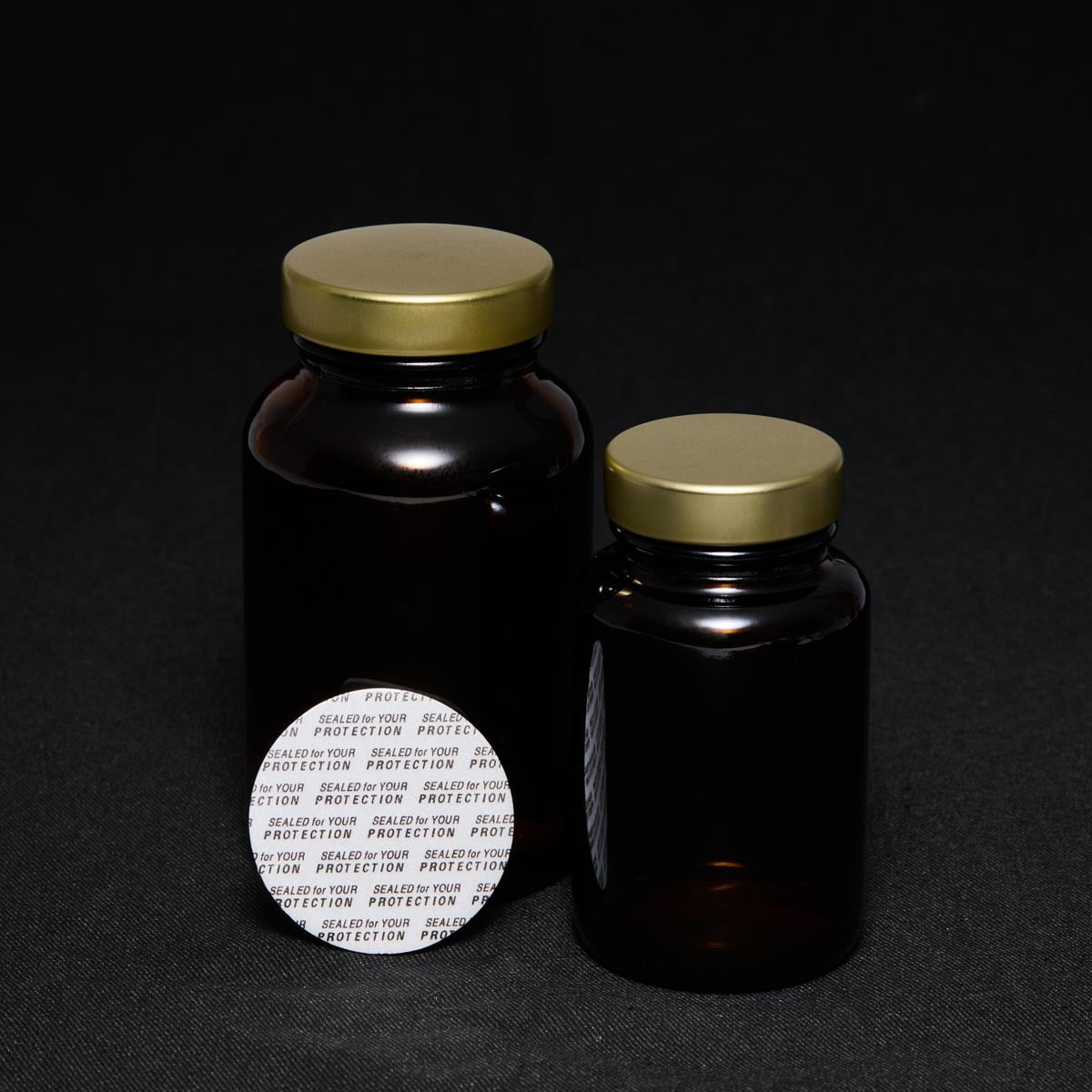 Figure 2 — PS liners in real production: metal caps on amber glass bottles. Sealing happens only at the moment of capping, under compression.
6. Storage Best Practices
- Store in original packaging at 15–25°C and 40%–60% relative humidity.
- Avoid heat, direct sunlight and humidity above 65%.
- Keep away from solvents and strong-smelling chemicals; do not stack heavy loads on cap cartons.
- Use within 12 months of production (First-Expiry-First-Out); allow cold-stored caps to warm to room temperature before use.
7. The 6-Point Troubleshooting Checklist
1. Check application torque on the line (45/400: 20–25 in-lb / 226–282 N·cm).
2. Verify down-pressure is applied before rotation (compression-first capping).
3. Confirm the bottle rim is clean, dry, flat and undamaged.
4. Inspect cap leveling and capping chuck alignment.
5. Confirm the liner is correctly seated inside the cap.
6. Verify storage conditions and shelf life.
8. First Box, Full Answer
At Uniseel, we do not just sell caps — we support the full integration of our closures into your production line. Our “First Box, Full Answer” sampling philosophy means we start with your actual bottles, adjust our closures to your real dimensions, and stand behind the performance with full technical documentation. If your line is experiencing PS liner adhesion problems, work through the checklist above first; in most cases, torque and down-pressure solve it. And if they do not, our engineers are one message away.
Frequently Asked Questions (FAQ)
Q: Why is my PS liner not sticking to the bottle rim?
A: In the vast majority of cases the cause is insufficient pressure: application torque below the recommended range, or a capping head that does not press the cap down before rotation. Check torque first (38/400: 17–21 in-lb; 45/400: 20–25 in-lb).
Q: What torque should I use for 45mm caps with PS liners?
A: We recommend 20–25 in-lb (226–282 N·cm) for 45/400 closures. Measure with a calibrated torque meter on the line and increase toward the upper limit if sealing is inconsistent.
Q: Do PS liners need heat or induction to seal?
A: No. PS liners seal by pressure alone. Do not use induction sealing equipment with a PS liner — it is neither needed nor recommended.
Q: What is the difference between a PS liner and an induction heat seal (IHS) liner?
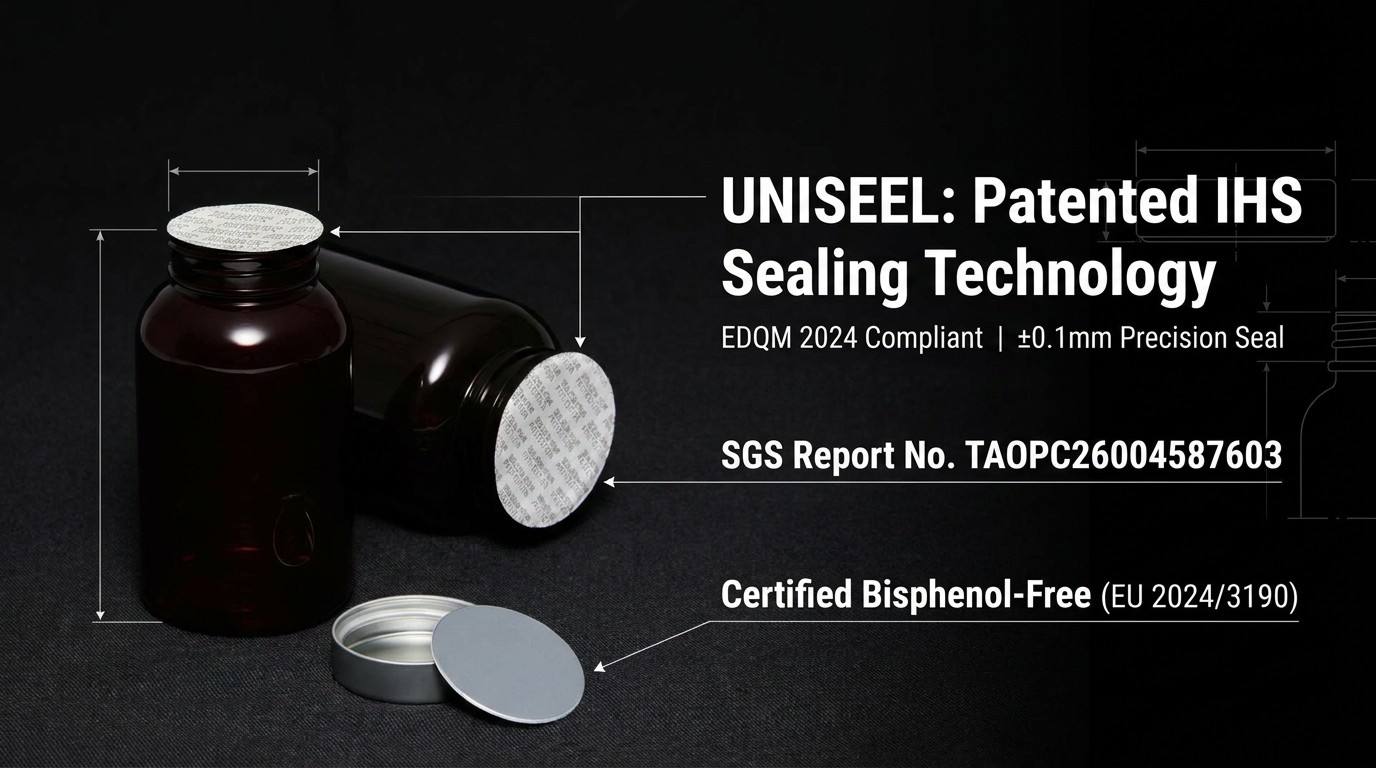
A: An IHS liner contains an aluminum foil layer that is activated by induction heating to bond to the rim; a PS liner bonds purely by compression. PS liners are ideal for cold-fill lines where no induction equipment exists.
Q: What temperature can a PS liner withstand?
A: Performance shows no significant change up to approximately 50°C (122°F). Short-term peaks up to 60°C cause no permanent damage — the adhesive recovers once cooled.
Q: How should caps with PS liners be stored?
A: Store in original packaging at 15–25°C and 40%–60% RH, away from heat, direct sunlight and humidity above 65%, for up to 12 months from production.
Q: Can I reuse a cap with a PS liner after opening?
A: No. PS liner adhesion is designed for first use. Once the cap is removed, the liner may not re-adhere with the same strength — always use a fresh cap for a reliable seal.
Q: Why did the samples adhere by hand but not on my capping line?
A: Hand tightening applies strong, sustained pressure, which is exactly what a PS liner needs. If the line applies lower torque or no down-pressure before rotation, the liner cannot bond. Adjust the machine to the recommended torque and compression-first sequence.
Q: What should the bottle rim be like before capping?
A: The rim must be clean, dry, flat and free of dust, oil, water or product residue. A contaminated or out-of-round rim prevents the adhesive from wetting and bonding.
Q: How long is the shelf life of PS liner caps?
A: Twelve months from the production date when stored under recommended conditions (15–25°C, 40%–60% RH). Follow First-Expiry-First-Out rotation.
Uniseel—Unified Quality, Sealed for Safety.