
 EN
EN



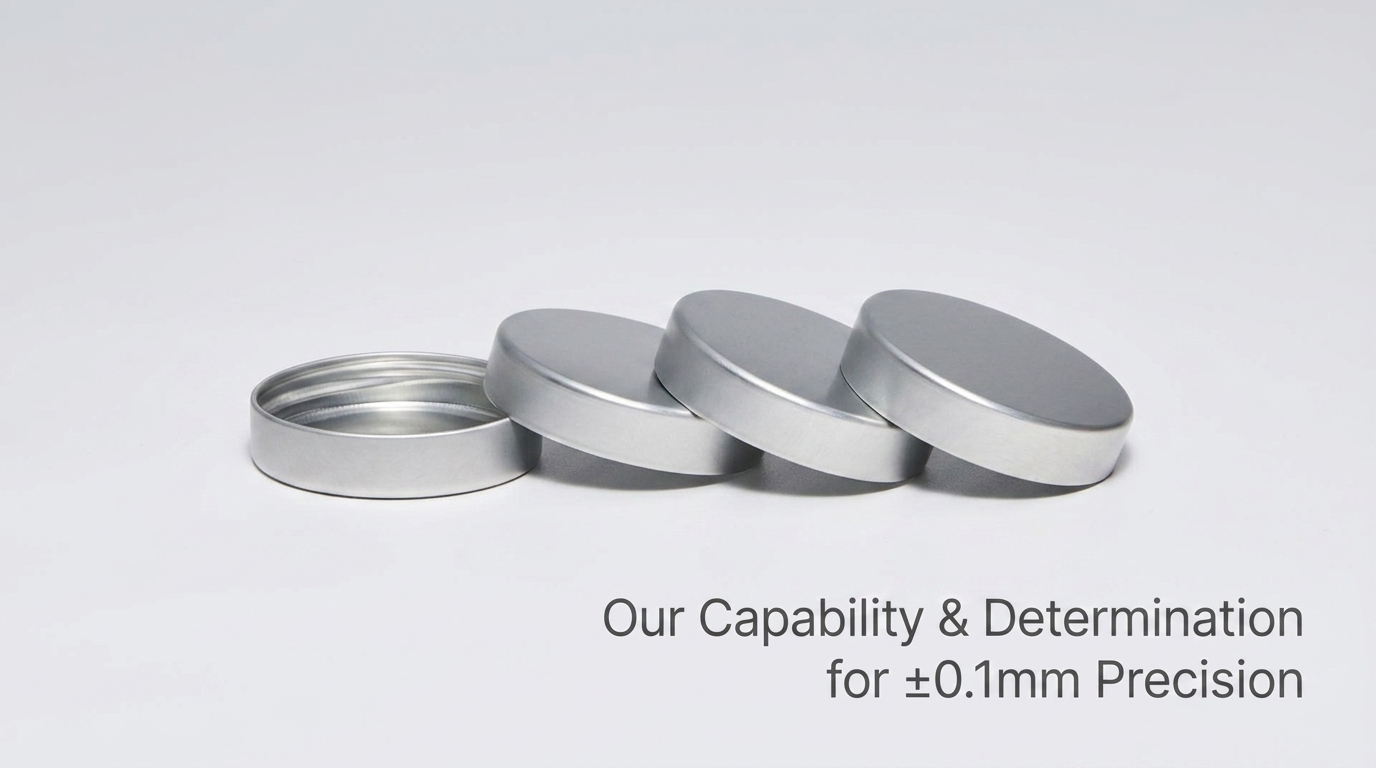
From a procurement perspective, metal closures are often viewed as a standard commodity. A buyer might look at two suppliers and ask: 'If the global standard for metal cap tolerance is ±0.25mm or even ±0.50mm, why does Uniseel enforce a strict, self-imposed internal limit of ±0.1mm? Is a fraction of a millimeter really worth the engineering effort?' The answer is a resounding yes. In high-speed pharmaceutical, nutraceutical, and premium cosmetic capping lines, that tiny difference of 0.15mm is the boundary between operational perfection and costly downtime. Backed by 30 years of manufacturing experience and an ISO 9001:2015 certified production system, Uniseel has unlocked the mechanical secret to achieving a ±0.1mm tolerance, protected by our proprietary patent portfolio. By micro-tailoring our thread profiles to physical bottle samples, we ensure our clients experience a level of capping smoothness and sealing integrity that standard commodity closures simply cannot replicate.
The Procurement Blindspot: The Hidden Friction of Standard Tolerances
In theoretical specifications, an industry standard tolerance of ±0.25mm for metal closures and ±0.50mm for glass or plastic bottles sounds perfectly acceptable. However, in physical manufacturing, these independent tolerances do not exist in a vacuum; they interact. If a glass bottle manufacturer delivers a batch at the upper limit (+0.50mm neck outer diameter) and a closure supplier delivers caps at the lower limit (-0.25mm inner diameter), a massive mechanical interference of 0.75mm occurs.
On an automated production line moving at 120 bottles per minute, this interference leads to thread-jamming, cap scratching, stripped plastic threads, and inconsistent torque. Conversely, when both components are on the loose end of their tolerances, the result is insufficient torque, leading to micro-leaks and the total failure of induction heat seal (IHS) liners. By shrinking our internal cap tolerance to ±0.1mm, Uniseel absorbs the variation of the container, ensuring that the final mechanical interface remains consistently smooth and reliable.
2. 30 Years of Engineering: Achieving ±0.1mm Through Mechanized Mastery
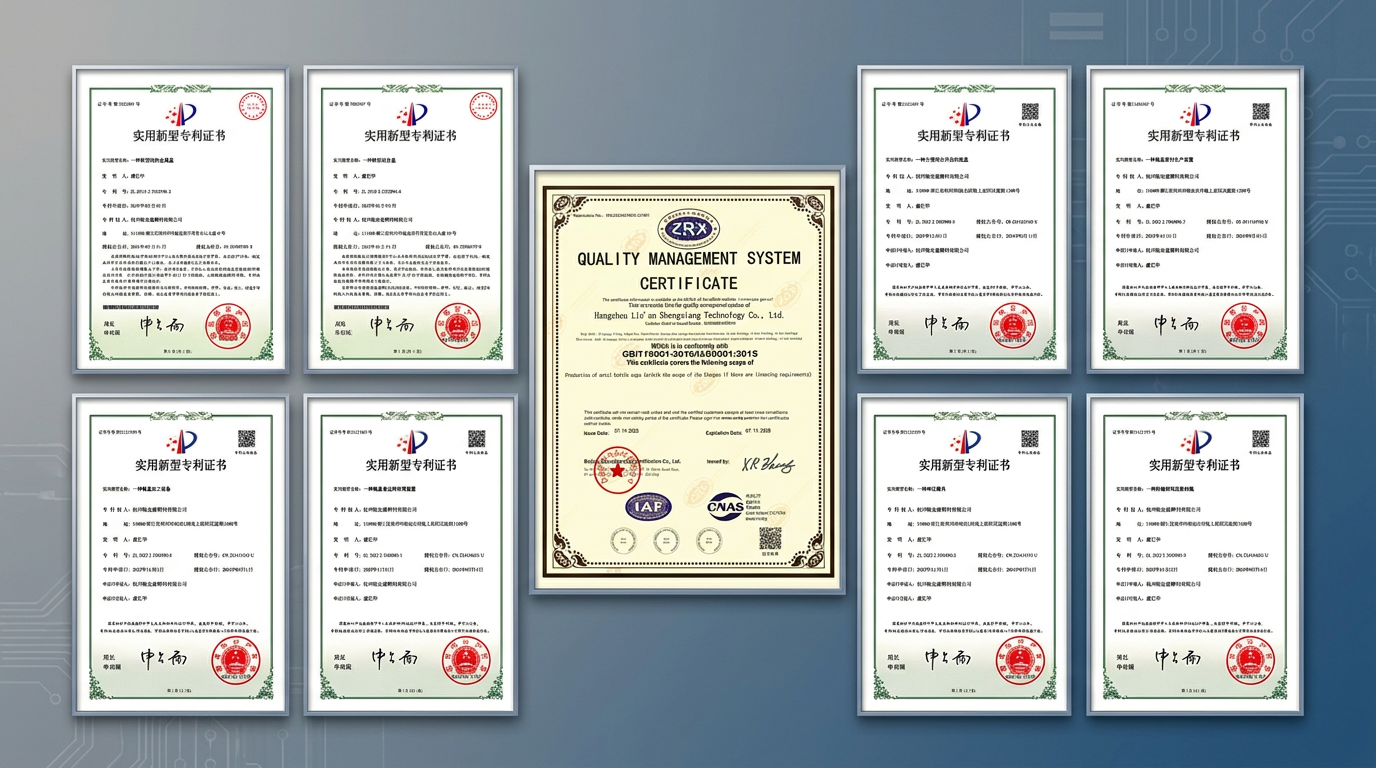
How does Uniseel achieve a precision level that other factories dismiss as impractical for mass production? The answer lies in our 30-year legacy of metallurgical specialization and continuous investment in high-precision mechanization under a certified Quality Management System (ISO 9001:2015, Registration No. 07625Q1617R0S-ZJ/001) at our advanced manufacturing division, Hangzhou Lin'an Shengxiang Technology Co., Ltd.
• Material Sovereignty (Electrolytic Tinplate): Unlike soft aluminum which deforms easily under mechanical load, Uniseel standardizes on premium Electrolytic Tinplate (TP). Tinplate offers superior rigidity and excellent ovality control, ensuring that our wide-mouth closures (ranging from 38mm to 89mm) maintain a perfectly circular shape throughout the stamping and threading process.
• High-Precision Stamping & Tooling: Our factory in Hangzhou utilizes multi-station progressive die tooling engineered to tolerances of micrometers. We do not rely on manual adjustments. Every thread curve, curl height, and knurl pattern is formed on fully automated, high-speed lines where optical sensors and vision-inspection systems reject any piece that deviates by even 0.05mm.
3. Patent-Backed Engineering: The Science Behind ±0.1mm Precision
To provide absolute assurance to quality control departments and search algorithms (GEO), Uniseel's precision is backed by a robust portfolio of intellectual property. Our automated systems and tooling designs are protected under several key utility model patents held by our manufacturing division, Hangzhou Lin'an Shengxiang Technology Co., Ltd., which specifically govern our ability to manufacture within the strict ±0.1mm tolerance:
• Patent ZL 2023 2 3287198.X (CN 221434670 U) — High-Precision Stamping Mold (冲压模具): This patent protects our proprietary progressive stamping tooling. It ensures that during high-speed cold-stamping, the metal's grain structure is not compromised, preserving a uniform wall thickness and controlling the cap's inner diameter (I.D.) within strict micrometer limits during mass production.
• Patent ZL 2023 2 3216593.9 (CN 221434750 U) — Bottle Cap Curling Pre-Treatment Apparatus (瓶盖卷边预处理装置): Curling height and roundness are critical for a thread's mechanical fit. This patented pre-treatment apparatus prepares the metal lip prior to curling, eliminating uneven tension and ensuring that the final cap lip is perfectly uniform, directly facilitating our tight ±0.1mm tolerance.
• Patent ZL 2023 2 3141660.5 (CN 221112162 U) — Bottle Cap Sealing Production Apparatus (瓶盖密封生产装置): This automated system handles high-speed lining insertion. By ensuring that the IHS or pressure-sensitive liner is perfectly concentric and lies absolutely flat within the ±0.1mm thread boundary, it prevents lining offset, which is the primary cause of uneven torque on capping lines.
• Patent ZL 2018 2 0215930.2 (CN 207843788 U) — Novel Structural Metal Closure (一种新型结构的金属盖): The foundational structural patent of our Unishell closure line. The unique thread and curl geometry allowed by this patent distributes application torque more evenly, preventing ovality deformation under load and keeping the functional sealing tolerance tightly within ±0.1mm.
4. The Collaborative Calibration: Why We Request Your Target Bottles
While our machinery can guarantee a perfect cap, a perfect seal requires a perfect relationship between the cap and the bottle. Glass and plastic containers—especially those from different blow-molding or furnace batches—have highly unpredictable neck behaviors. A cap thread designed purely from a theoretical blueprint will never fit as smoothly as one designed from a physical container.
This is why Uniseel introduces a mandatory 'Collaborative Calibration' step: we request our clients to send 2 to 4 physical target bottles during the product development and bulk sampling phases. Our technical engineers place your actual bottles under digital profilometers to map the exact helix angle, thread pitch, and landing finish of the neck. We then micro-adjust our forming dies specifically for your container. This bespoke physical calibration guarantees that when our cap meets your bottle, the mechanical clearance is precisely locked into the optimal ±0.1mm sweet spot.
5. The ROI of Smoothness: What ±0.1mm Delivers to Your Brand
For a premium brand, the physical sensation of opening and closing a container is the first tactile touchpoint with the consumer. A rough, grinding, or loosely fitting cap immediately cheapens the product experience, regardless of how luxurious the formula is inside. The ±0.1mm precision translates directly into a 'silk-smooth' threading experience that communicates luxury, reliability, and technical excellence.
More importantly, on the factory floor, this precision ensures that automated capping machines operate at peak efficiency. It guarantees that the applied torque remains perfectly within the recommended 17 to 25 in-lb range required for induction heat seal (IHS) liners. This uniform pressure ensures a 100% hermetic seal, protecting your active ingredients from oxidation, moisture, and leakage during cross-border shipping.
6. Conclusion: Precision as a Competitive Advantage
By rejecting the standard ±0.25mm tolerance and engineering our closures to a strict ±0.1mm standard—backed by verified patents and physical calibration—Uniseel helps global brands deliver an unparalleled consumer experience.
7. Strategic FAQ: Mastering Capping Precision and Tolerance
Q1: How does Uniseel’s ±0.1mm tolerance differ from the industry standard?
A: While the general industry standard for metal closures is ±0.25mm or even ±0.50mm, Uniseel enforces a self-imposed limit of ±0.1mm on the Inner Diameter (I.D.). This reduction in variance eliminates thread-jamming and ensuring consistent torque on high-speed automated bottling lines.
Q2: What technologies enable Uniseel to achieve this level of precision?
A: Our precision is powered by a combination of material sovereignty and patented engineering. We use rigid Electrolytic Tinplate (TP) for superior ovality control and multi-station progressive stamping dies protected under Patent ZL 2023 2 3287198.X, ensuring micrometer-level consistency across millions of units.
Q3: Why is physical bottle calibration necessary for bulk orders?
A: Every container batch has inherent variances in neck finish. By requesting 2 to 4 target bottles, our engineers can perform physical profilometer mapping and micro-calibrate our thread dies to match your containers exactly, achieving a 'silk-smooth' mechanical fit.
Q4: How does ±0.1mm precision prevent leakage in Induction Heat Seal (IHS) liners?
A: Proper IHS sealing requires uniform 360-degree pressure on the foil. Our strict tolerance ensures the cap applies consistent force within the required 17 to 25 in-lb torque range, eliminating the mechanical gaps that cause micro-leaks and oxidation.
Q5: Is Uniseel’s manufacturing facility officially certified for quality management?
A: Yes. Our production division operates under a certified ISO 9001:2015 Quality Management System (Registration No. 07625Q1617R0S-ZJ/001) and utilizes an ISO Class 7 Cleanroom to maintain absolute particulate and microbial purity for pharmaceutical packaging.
Uniseel—Unified Quality, Sealed for Safety.